


When a Stroke Steals More Than Movement
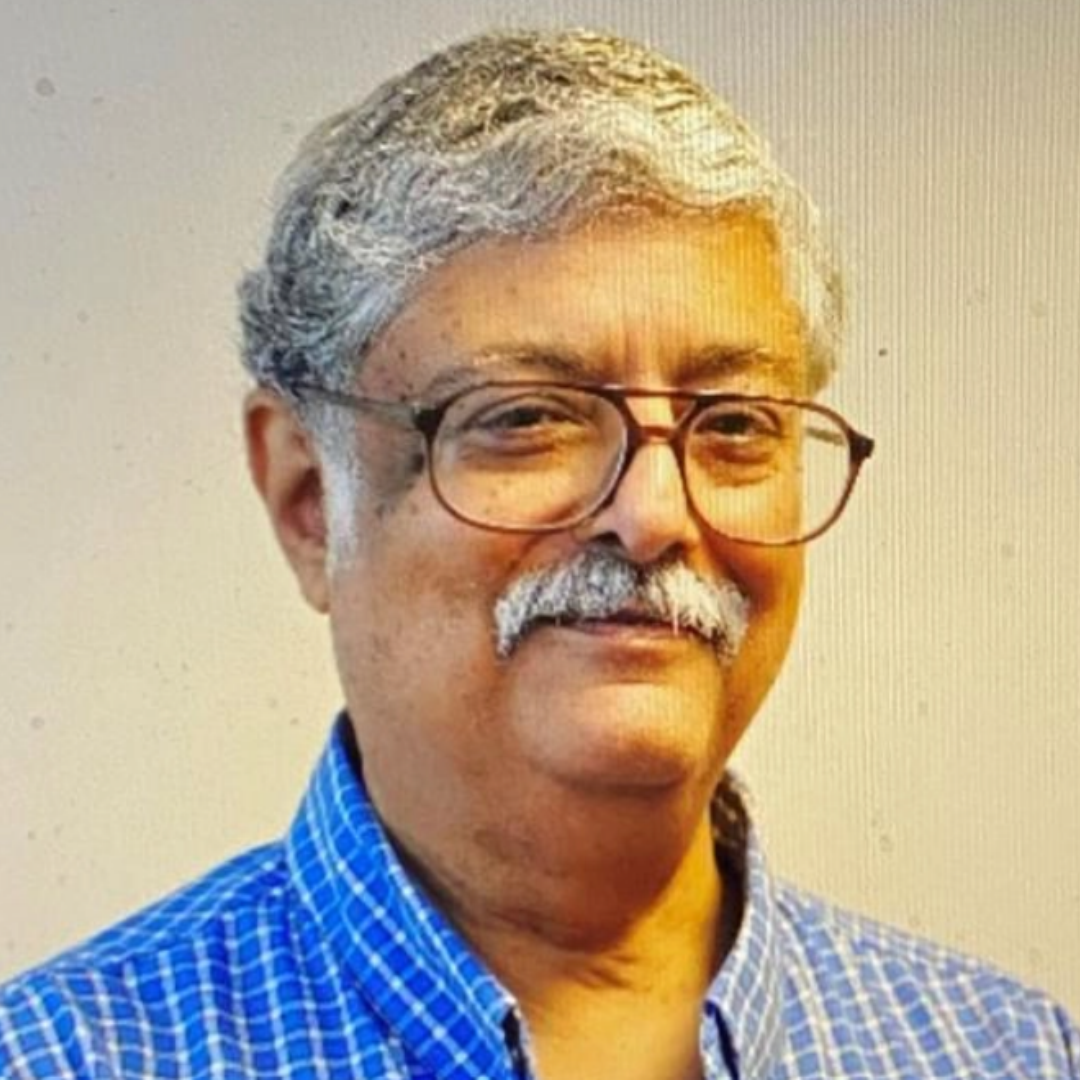
A survivor and his care partner on the hidden injuries of stroke, and the way back

One morning in September 2021, three months after I retired from the Wharton School of the University of Pennsylvania, I sat down to answer a few emails and found that my left hand had stopped listening to my brain. I told my wife, Hema, and our daughter, Tara, that I was just tired from a trip and needed a nap. They didn’t buy it. Tara, in tears, said she had looked up my symptoms online. Hema said we were going to the emergency room, now. Minutes after we arrived, a triage nurse called out, “Stroke alert!”
I had suffered a pontine lacunar stroke. Overnight I lost the use of the left side of my body. I could not walk, my speech slurred, and at mealtimes the nurses tied a bib around my neck. Two heart attacks followed in the months after. Those physical losses were hard. What nearly broke me, though, was something else that no scan had picked up.
For more than 45 years I have been a writer and editor. After the stroke I could do neither. If I was not a writer, who was I? Hema and Tara came to the rehab center every day, and often I sat through their visits sullen and silent. On the darkest days I questioned whether life after the stroke was worth living.
On November 12, Hema and I will join psychologist Dr. Blaise Morrison on Ep. 60 of the Shining Light on Shadows podcast, co-hosted by Neil Parekh and Dawn Neuburg, “Beyond Physical Recovery: Mental Health After Stroke” to talk candidly about the psychological, emotional and identity challenges our family faced: the grief, the strain on a care partner, the dark days, and what helped us find light again. We share it because silence makes these struggles heavier.
Watch the show Thursday, Nov. 12 at 7pm ET on Facebook*, Twitter**, LinkedIn, YouTube, Instagram** or Neil's website. (You can find more details about the show on his website.)
*Facebook will delete the video in 30 days (approx. December 11).
**We won't know the specific links for Twitter and Instagram until we go live. For now, these links go to Neil's Twitter and Instagram profiles.
I later learned that this crisis of identity is something almost every stroke survivor goes through. Debra Meyerson and Steve Zuckerman name it in their book, Identity Theft: Rediscovering Ourselves After Stroke (second edition). Yet the medical system that did so much for my body offered very little for my mind. Too many survivors, and the families who love them, are left to face the emotional aftermath alone.
A stroke happens to a whole family
A stroke does not happen to one person. Overnight, Hema went from wife to care partner. She and Tara typed my emails in those first weeks, carried the fear and the logistics, and held on to hope when I could not. Care partners carry their own grief and exhaustion, often quietly, because everyone’s attention is on the patient. “It was a challenging time,” Hema says. “Neither Tara nor I was prepared for it in any way. What sustained us didn’t come right away. Gradually, we realized that we were still a family, and that we had to face this together, as a family.”
Two forces pulled me through. The first was love: my family, friends and former colleagues who kept trusting me with writing and editing projects while my body healed. The second, unexpectedly, was AI technology. Predictive text let me send short messages on my own, and some of my agency returned. WhatsApp voice notes let me say more. Then an AI transcription tool, Otter.ai, changed everything. I could think through a piece, speak it, let the software capture it, and then do the editing myself. Eight months after my stroke, I published a full article again.
I still practice typing every day, because I want to use AI as a tool, not lean on it for everything. And I have learned that recovery does not mean returning to who I was before. It means building a meaningful life around what I can do now: not bouncing back, but bouncing forward, as I learned from Identity Theft.
Why we’re talking about it
If you or someone you love is living with the aftermath of a stroke or another life-altering illness, we hope this discussion helps you feel less alone. Stroke Onward, where I serve on the board, offers resources for survivors and care partners rebuilding their lives at strokeonward.org.
To my fellow survivors and their families: you are stronger than your stroke. Never give up.


Comments